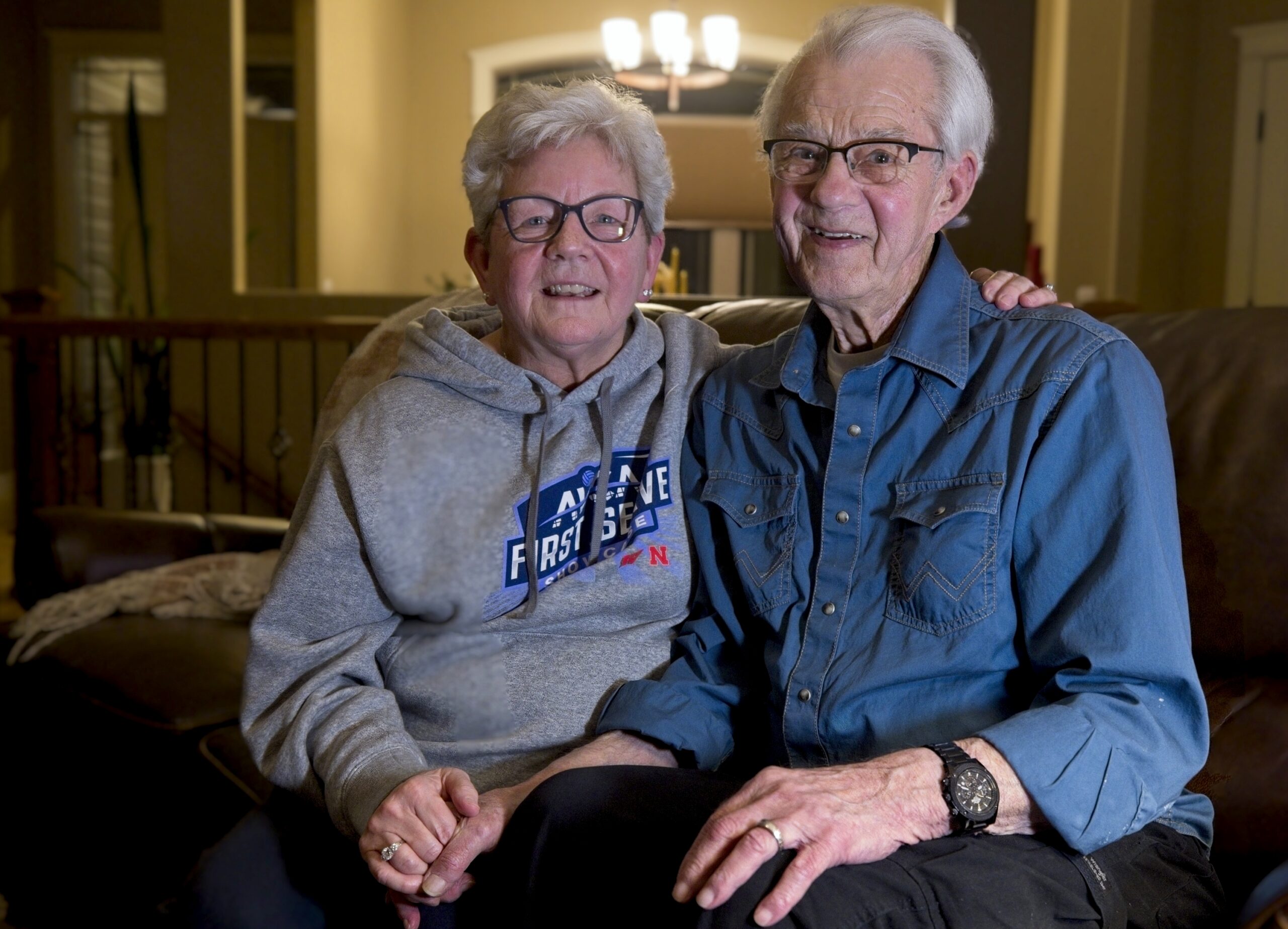
Inspired by his wife Alicia’s faith, Frank Holstein of Papillion last fall entered the process to become Catholic. JOE DEJKA
Equipping Disciples
Parishes see ongoing surge of people interested in becoming Catholic
February 17, 2026
A version of this story originally appeared in the January 2026 edition of The True Voice magazine. Copies of the magazine can be found at parishes across the archdiocese.
For most of his life, Frank Holstein shrugged off Catholicism as too rigid and bound up in baffling rules and formalities.
Baptized Methodist but not practicing, he poured himself into the dealership he owned, selling Harley-Davidson motorcycles at 72nd and L streets in Omaha for 43 years.
Now 87 years old and retired, Holstein is making a U-turn.
Inspired by his Catholic wife Alicia’s devotion and pleasantly surprised by a Papillion priest who dispelled some of his negative perceptions of the faith, Holstein is now taking classes to join the Church this year.
During the upcoming Easter Vigil, parishes across the archdiocese will welcome hundreds of new Catholics through the Order of Christian Initiation of Adults (OCIA).
Anecdotal reports from parishes suggest that the archdiocese may see a repeat of last year’s surge in new Catholics. Overall, the archdiocese has experienced consecutive years of gains in the OCIA program since 2020. In 2025, the archdiocese welcomed 710 OCIA participants, the highest number in at least a decade.
Deacon Pat Dempsey, director of the OCIA program at St. Columbkille Parish in Papillion, saw his parish’s enrollment jump 50% this year.
“It really seems like the Holy Spirit is doing something,” Deacon Dempsey said.
In the fall of 2024, 20 people enrolled at St. Columbkille, he said. This year, 30 enrolled.
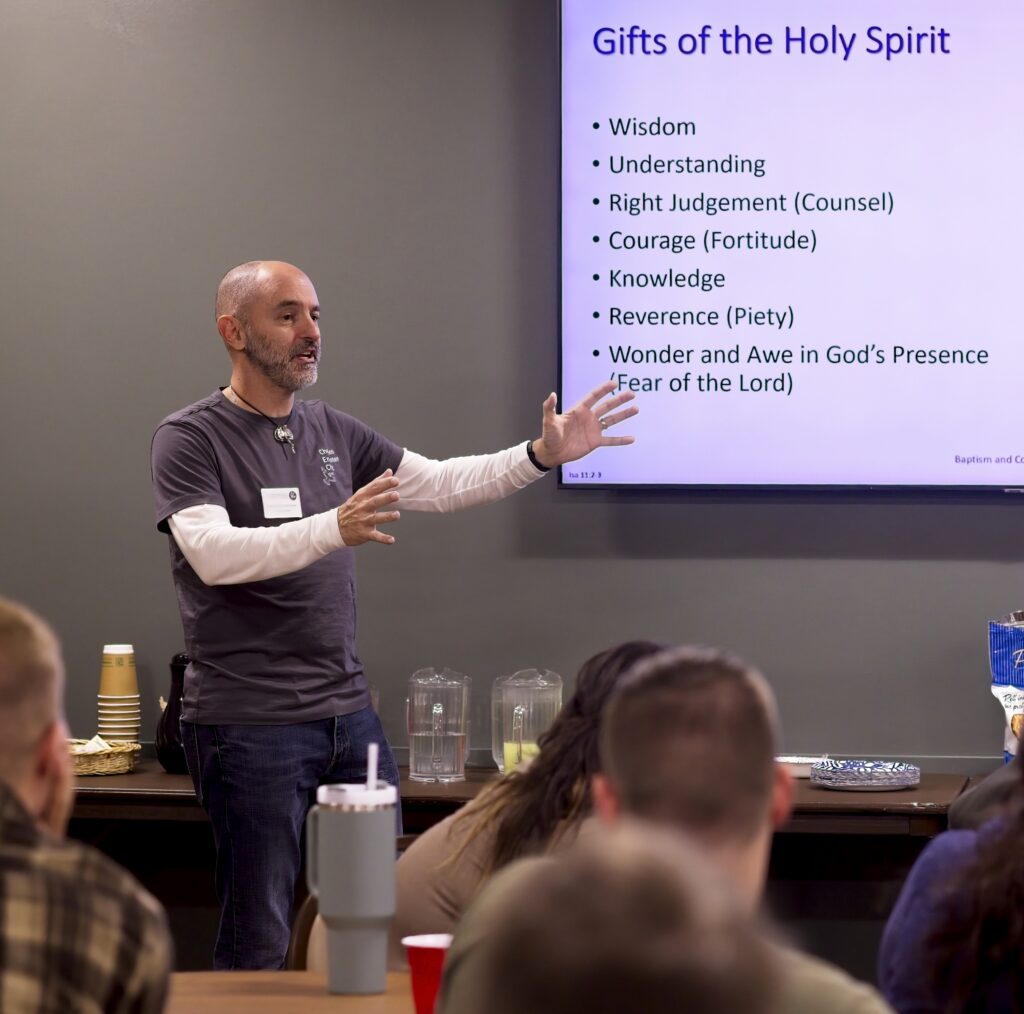
Deacon Pat Dempsey leads a Tuesday night OCIA session at St. Columbkille Parish in Papillion. JOE DEJKA
There are several explanations for the rise in OCIA participants, according to local OCIA directors.
Even though he is older, Holstein’s path to Catholicism is a common one. Formal religion was scant concern during Holstein’s life despite his belief in God. As Alicia’s faith intensified in recent years, Frank watched her with great interest and found himself asking: “What’s she got that I don’t have?”
Friends and family who model the faith are often the most powerful influence when non-Catholics are searching for meaning.
In some instances, non-Catholics, dissatisfied with the country’s political and social trends, are yearning for something more stable and meaningful. The Church’s values and traditions are appealing.
National figures and popular podcasters, courageously advocating for Christianity and Catholicism in the public square, have provided a counterpoint to the culture. Social media offers Catholic content unavailable to generations past.
Another factor likely spurring interest was the media coverage of the April 21 death of Pope Francis and the subsequent conclave and election of Pope Leo XIV, events that focused attention on the Church and its history, mysteryand tradition.
“The Catholic Church kind of had an infomercial all of last summer,” said Emily Barker, director of evangelization for St. Wenceslaus Parish in Omaha.
At St. Wenceslaus, the fall 2025 enrollment was about 35, up from 26 last year and 15 the year before, Barker said. People under 30 make up more than half the parish’s participants.
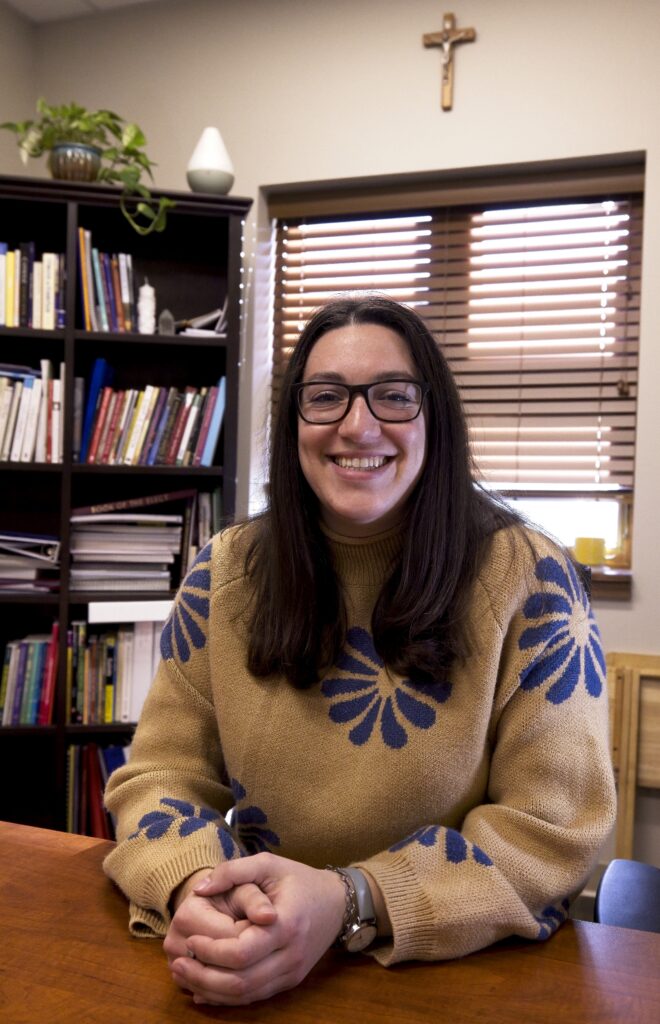
St. Wencelsaus Parish in Omaha is among parishes seeing an increase in OCIA participants, according to Emily Barker, director of evangelization for the parish. JOE DEJKA
One woman in the program said the media attention on the popes spurred her to look into Catholicism, Barker said.
Some who entered the program married a Catholic, or they’re interested in marrying a Catholic, Barker said. Others grew up without going to church, and a few are fathers who want to raise their children in the faith.
Katie Winkler directs the OCIA program at the St. John Paul II Newman Center in Omaha.
Fifteen college students entered the Newman Center program in the fall, Winkler said, with a few more “in the wings.”
“Last year at this time, we had three interested,” she said. “That’s just a huge increase.”
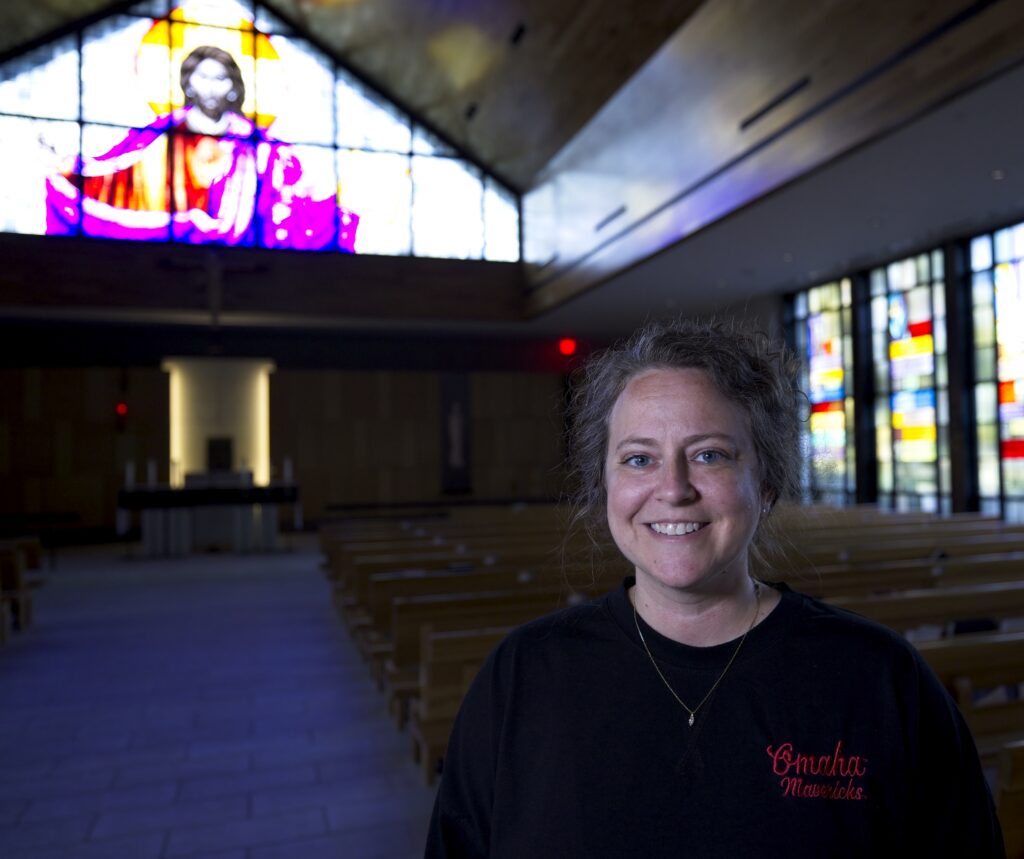
Katie Winkler, director of the OCIA program at the St. John Paul II Newman Center in Omaha, is pictured in the Newman Center’s oratory. JOE DEJKA
Father Dan Andrews, pastor, said more recently that 19 people at the Newman Center were preparing to enter the Church, the largest group ever.
Winkler said the young people who come to her are looking for something more. Almost always, they have a friend who played a role in their search, she said.
Evangelizing the faith doesn’t have to be complicated, Winkler said.
“It’s basically being a good friend … which is just ‘I saw this person that I trusted that had something I was looking for,’” Winkler said.
At St. Mary Parish in Norfolk, 11 entered OCIA in the fall, said Philip Zimmerman, who directs the parish OCIA program. Last year, eight entered the program, and two entered the Catholic Church.
People are seeking “something tangible to hold onto” when today’s culture is ripping down tradition, he said.
Olivia Beldin, 27, is attending OCIA at St. Columbkille, and wants to raise her infant son, Jaden, in the Church.
“I want to give my son a chance to know Jesus, like my great-grandma tried to do with me,” she said.
Her own upbringing was less than ideal — drug-addicted parents, placement in foster care and four prison stays, she said.
Unmarried and pregnant, she had a euphoric experience during an ultrasound, similar to a prior experience reading a Bible in prison.
“I knew it was God,” she said.
During a stay at Mater Filius, a Catholic shelter in Omaha for mothers in crisis, she attended Mass and embraced the faith. She found her sponsor there and enrolled in OCIA.
At Divine Mercy Parish in Schuyler, 30 are in the OCIA program, 10 in English and 20 in Spanish, according to Father Jairo Congote, pastor. The parish has about 1,100 families.
“That makes me very excited about being a priest and being at this community,” he said.
Michael Emmerich, archdiocesan director of liturgical formation, ironically sees an opportunity in “the nones,” people in the current generation with little or no involvement with the Church.
“They don’t have a good impression, but they don’t have a bad prejudice either,” Emmerich said. “It’s kind of a hopeful moment.”
People who are not familiar with the Church have an opportunity to form their own judgments about it, he said.
For Holstein, a big step forward was letting go of childhood stereotypes.
St. Columbkille Pastor Father Tom Greisen’s warm and funny personality helped break down Holstein’s notion of a stodgy, authoritarian priest.
“He just seemed down to earth, and you could relax and be comfortable around him,” Holstein said. “It’s not like I remember.”
READ MORE FROM THE CATHOLIC VOICE: