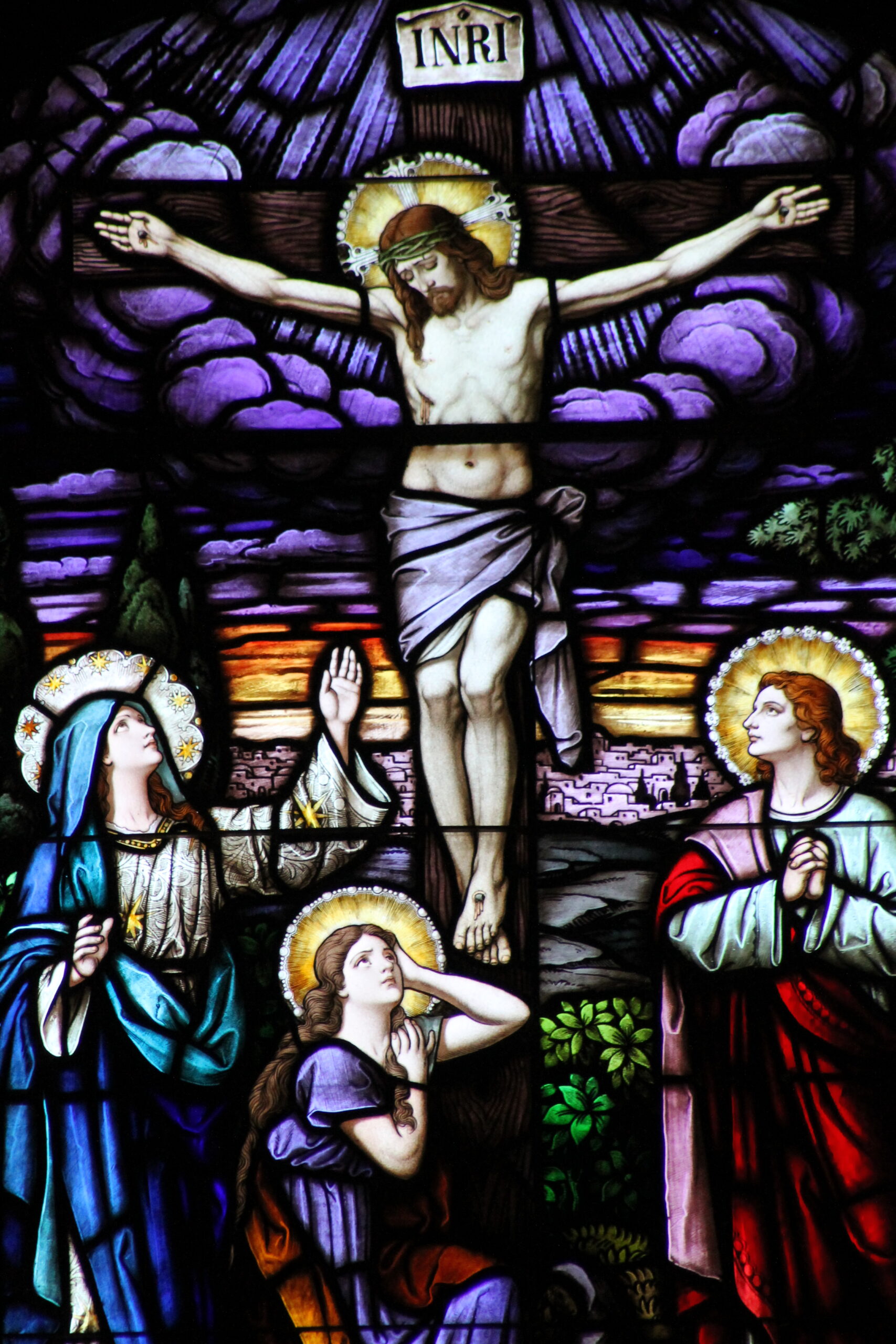
Encountering Jesus
Jesus wants to draw you close as Holy Week nears
March 19, 2026
Helping people grow in intimacy with God is what Jen (Moser) Steffensmeier and Apostolic Oblate Jessi Kary have been doing for years.
In Lent – and throughout the year – they teach people how to daily converse with the Lord. Now, as Holy Week and Easter approach, they offer some guidance on how to walk more closely with Jesus.
The two co-authored a book, “Relational Prayer: A Small Group Guide,” to help people learn together how to open their hearts in sincerity, listen to God and learn His will for them. A Spanish version of the book will soon help reach an even wider audience.
Steffensmeier is coordinator of leadership formation for the Archdiocese of Omaha and teaches relational prayer to participants in the archdiocese’s Mentorship Program. Come & See events are currently being offered for those interested in the Mentorship Program.
Kary, national leader of the Apostolic Oblates, is part of the Pro Sanctity Movement, which promotes the universal call to holiness.
The book, Kary said, was influenced by the Institute for Priestly Formation in Omaha and originally published by the organization. The institute emphasizes the importance of relational prayer for growing in holiness, and as something not just for priests but as something they could pass on to parishioners, Kary said.
“Certainly we encounter God in all sorts of different places,” Steffensmeier said, such as nature, other people, retreats and study of Scripture. “But all those encounters are amplified and made more fruitful if we’re also having that heart-to-heart dialogue with the Lord,” she said.
Relational prayer has changed her life, Kary said, and she will never turn down an opportunity to share it with others.
WHY SMALL GROUPS?
Relational prayer can be developed individually, but being part of a small group helps, Kary and Steffensmeier said.
A small group could be just two people – a husband and wife or a couple of friends – or slightly larger with family members, fellow parishioners, co-workers or neighbors.
Small groups can be fruitful in a variety of ways, Steffensmeier said. “It comes down to where the Lord put you and who are the people that He is placing you in community with – and to notice: Where is my own heart drawn to want to share this with others?”
Small groups have been central to the archdiocese’s goal of parishes becoming more missional, Kary pointed out, and key for the Pro Sanctity Movement.
“That was something super important to our founder, Bishop (and Servant of God William) Giaquinta, that we’re not lone rangers,” Kary said, “that we’re in a supportive community of people journeying together in holiness.”
FINDING TIME
“Every relationship takes time,” Kary said. “Sometimes we expect that our relationship with the Lord can happen in the midst of everything else because the Lord’s with us all the time. And that’s absolutely true.
“Yet we as human beings can’t actually do more than one thing at a time. We try all the time. So setting aside time to simply be available to share our hearts with the Lord and to listen to Him as He responds to us is really fundamental and critical.”
Real intimacy requires attention, availability, silence and deeper listening, she said. “Setting time aside each day makes it a priority for us personally, but it gives God a space in which to do more in our hearts than if we’re running around.”
People who think they’re too busy to pray typically have more time than they think. Morning is ideal, Kary said, but it’s not the best time for everyone. What matters most is to have a consistent time every day.
Examine where you spend time, she advised, and make priorities.
“It really comes down to the question: Is prayer the greatest priority in our daily life? I think that once we have a taste of what God wants to do with us, how He wants to be close to us, and how He wants to have a relationship beyond what we can ask for or imagine, it becomes easier to make that a priority.”
STARTING THE CONVERSATION
A conversation with God should be natural, similar to the way people converse with those around them.
“We share a bit of ourselves, and the person that we’re in relationship with shares a bit of themselves,” Kary said. “And we receive each other.”
The same is true with the Lord, she said. “We tell Him what’s on our hearts, and He has something to say about that. First of all, He wants to receive us as we are, and then He wants to respond.”
The Church offers the Scriptures as one of the most ordinary ways that God speaks.
Spend time with a Gospel passage, Kary suggests, and ask yourself: What do I relate to?
Ask the Lord: How are You speaking to me in this? How are You showing Yourself to me as I receive this passage? Simply tell Him: I want to experience You, Lord.
“It really can be as simple as that,” she said. “We’re made for this. We were made to be in relationship with God, and He is certainly laboring at every moment to be in relationship with us.”
While you’re reading Scripture, notice what stands out to you and what thoughts, feelings and desires come up, Steffensmeier said, and relate them honestly to God.
“Ultimately,” she said, a dialogue “begins when we lean into those habits of noticing what’s going on inside us, and then honestly and consistently telling the Lord about those things each day.
“As we do that, we want to notice His response to us, which doesn’t always sound like an audible voice. But if we’re following the Lord faithfully, He’s going to speak,” through consoling thoughts, feelings and desires that come up.
“We’ll start to, with time, learn and notice more clearly what we’re receiving from Him during that time of prayer,” Steffensmeier said.
Through relational prayer, God can inspire, guide and give directions that will help you know His will and how to carry it out in your daily life, she said.
Honesty and consistency – showing up every day – are key, according to Kary, but the rewards are priceless.
“The Lord wants to uplift us at every moment and has something for us. He wants to teach us more and more how to receive those graces and gifts.”
GOD’S GENEROSITY
As we deepen our relationship with God, Steffensmeier said, we’ll start “to notice the Lord’s grace permeating our experience of life in new ways,” including the grace to overcome patterns of sin.
“It isn’t just us trying to do it on our own efforts,” she said. “We actually experience a greater ability to love God and love our neighbor. We also start to experience a greater confidence that I actually know God’s will for my life, and I have the grace to live it out and the guidance and direction that I need.”
“There are a lot of people who want to know where the Lord is leading them and calling them,” Steffensmeier said. “This type of prayer opens up a whole new way of having that clarity and confidence in the direction that He’s leading us.”
People also will be more aware of how God is working throughout their day, not only during prayer time, Kary said. They will find more “joy, peace, simplicity and an ease” in their day and in ordinary circumstances. They will sense that they are “loved and known in a way that nobody else can love and know us.”
People around you will benefit, too, Steffensmeier said, as you “love them more fully and more effectively.”
“Our families are the first beneficiaries for sure,” she said, “but also our parish communities and hopefully everyone else around us, even in the secular world.”
Kary urges everyone to keep an ongoing, day-to-day conversation with God.
“Give the Lord the benefit of the doubt,” she said. “Give Him a little space and see what happens. He has never let me down, and I bet He won’t let you down either.”
READ MORE FROM THE CATHOLIC VOICE: