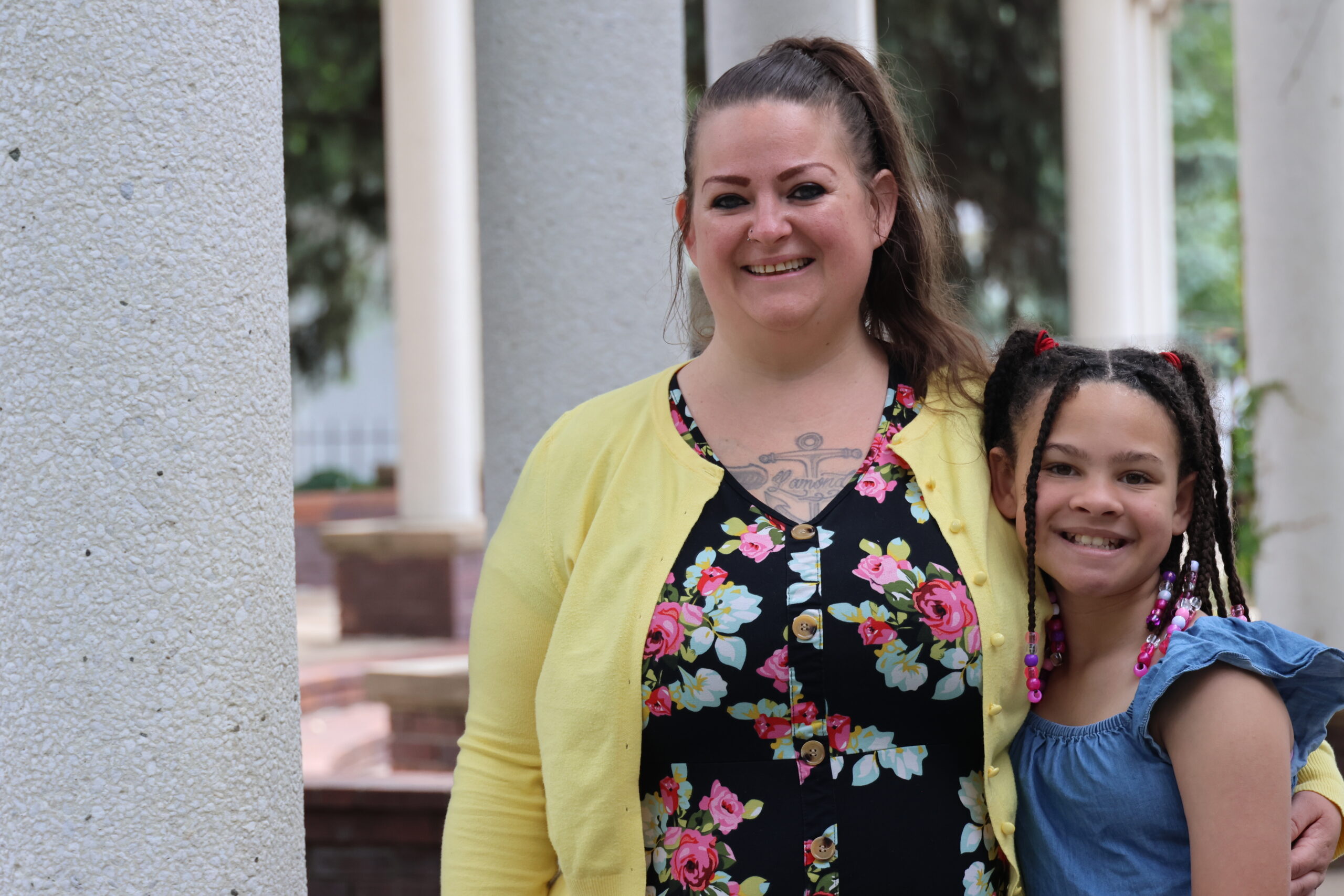
Kyndra Garrett is pictured with her youngest daughter, Aniya. Garrett felt pressure to abort her now 9-year-old daughter, but Garrett received the wrap-around care she needed to overcome the challenges she faced at the time. PHOTO BY SUSAN SZALEWSKI
Living Mercy
Guiding Grace shares model for lasting pro-life care
June 25, 2026
When Kyndra Garrett became pregnant, family members were less than excited.
Even her adult daughter suggested an abortion.
“Khylie, my oldest, begged me to terminate because she didn’t want me to have another unhealthy pregnancy,” the mother said. Garrett suffered from a drug addiction and other problems and her daughter didn’t want her to “bring another baby into my mess.”
Her first pregnancy occurred at age 14, when she was in eighth grade. She had two more children by the time she was 19, all while she struggled with addiction, poverty and homelessness.
“And with each one, my family was not supportive,” Garrett said.
When she became pregnant again in 2016, at age 32, she sought shelter at an Omaha maternity home. There she found help for her addiction and multiple resources to begin to turn her life around.
“It was a joy,” she said. “People were happy that I was pregnant.”
Since then, Garrett has overcome the challenges of her past. She has strengthened relationships with her older children — and grandchildren. Her baby, Aniya, now 9, thrives, and excels as a student at All Saints Catholic School in Omaha.
Garrett also helps people in situations similar to what she faced, working at Guiding Grace Family Support Network in Omaha.
The family care specialist is the first person someone sees when walking in, a welcoming presence for individuals and families in need of the same type of care she received – a “safety net” of resources, services and training.
The idea for Guiding Grace was developed by Gina Tomes, who was employed at the maternity home when Garrett was a resident there in 2016-2017. Tomes later recruited her friend to help at Guiding Grace.
Tomes, executive director of the two-year-old organization, has been in the business of helping pregnant mothers for 35 years through various pro-life entities locally and nationally – serving on a national maternity housing board for Heartbeat International and with the Susan B. Anthony List.
Tomes has seen how the more than 7,000 pregnancy centers and approximately 500 maternity homes in the United States provide critical aid. Yet she’s recognized deeper needs.
“Something needed to elevate and grow the pro-life safety net if we wanted to make a difference,” Tomes said. Guiding Grace has strived to fill those gaps.
Right now, the pro-life movement tends to be “crisis responsive,” she said, “and that’s great that we are.”
Guiding Grace, however, seeks to be more proactive, preventing some of the problems families encounter with an unexpected pregnancy and coordinating care that will last into the future.
The nonprofit partners with people and organizations that can help in a number of ways, including medical care, therapy, scholarships, housing, child care, transportation and post-abortion counseling.
Those partners know that Guiding Grace is unabashedly pro-life, Tomes said, and they are expected to be pro-life in their support, never suggesting abortion as an alternative.
At Guiding Grace, she said, “we are providing another level of services to abortion-vulnerable women and families.”
Guiding Grace’s office – at The Center, near 42nd and Center Streets in Omaha – has space for classes, child care, a kitchen, case management offices, and storage.
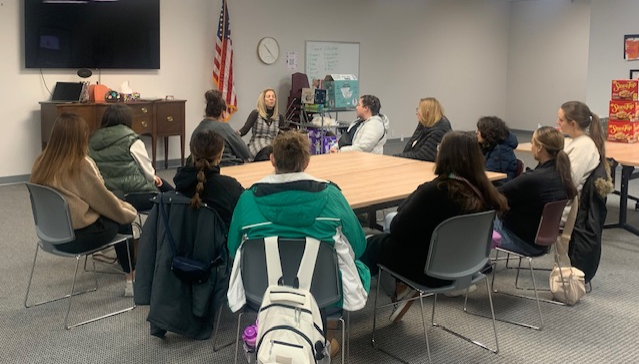
A support group meets at the Guiding Grace office in Omaha. COURTESY PHOTO
The organization works with a $1.5 million annual budget, funded by donors, grants and government aid.
“We’re very serious about dismantling the barriers that drive abortion,” Tomes said. “And thus far, it’s working.”
The pro-life advocate has looked at the reasons women choose abortion.
“Overwhelmingly, the number one reason women choose abortion is lack of support,” she said. “Sixty-seven percent of women who have obtained abortions have reported that if one person would have said ‘I will support you through this pregnancy,’ they would have chosen, and wanted to choose, life.”
The second most-stated concern is a lack of income, Tomes said. Those women are “financially strapped and stressed, and they fall below the poverty line.”
A third stumbling block: addictions and mental health issues.
To address those problems, Guiding Grace has case managers, who meet with people one-on-one to individualize care, set goals, find resources, coach and befriend.
The organization provides other help through classes and support groups, which offer fellowship for those in need. That combination of case management, classes and community transforms people and changes the course of their lives.
A typical person served at Guiding Grace is a single mother with one or two children, someone who likely considered abortion, Tomes said.
But clients don’t have to be pregnant to receive help. And they don’t have to be women.
Men are among those aided by Guiding Grace, and they’ve become increasingly engaged in its services.
Guiding Grace serves entire families, helping, for example, a teenage daughter who might be struggling with school or mental health issues. All families receiving help through Guiding Grace live in poverty, Tomes said.
The organization grows daily. It’s able to serve 250 families and has an equally long waiting list.
Even those who are waiting are pointed toward available resources in the community, but ultimately the organization has to grow to meet the needs, Tomes said. “We need funding, and we need to grow our capacity.”
Guiding Grace offers “a designed menu of services,” that includes employment training and classes on cooking, finances, parenting and relationships.
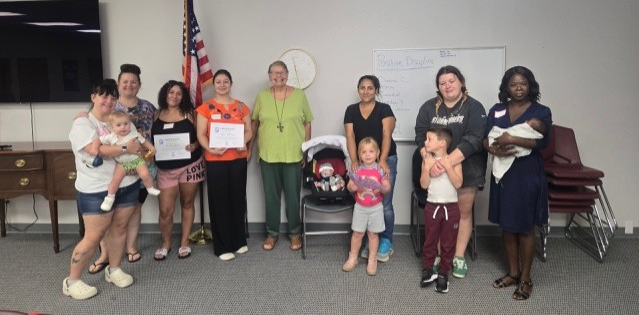
Members of a parenting class get together for a picture. COURTESY PHOTO
“Our classes are every night of the week and are very full, very structured, very long-term,” Tomes said.
Participants in Guiding Grace programs go on field trips and retreats together.
“We’re doing things to elevate” pro-life service, Tomes said. “We cast our net wide,” to include a range of people and to offer help that can prevent a crisis.
Knowing that help is available – before a crisis occurs – changes the abortion culture, Tomes said, and helps people lead better, healthier lives.
When in need, “they know that you’re there.”
Guiding Grace’s goal is a culture shift away from abortion, but “we’re not going to be able to do that until we are educating women who aren’t even pregnant about the culture of life,” she said. “So that if they do experience an unexpected pregnancy, they know without a doubt, Guiding Grace has me, Omaha has me, Nebraska has me. I’m wrapped in services.”

Guiding Grace families take part in a pumpkin patch outing. COURTESY PHOTO
That model is finding success in the Omaha area, and people in other parts of the country want to copy it.
“We’re trying to perfect what we do so that we can share it, scale it and replicate it,” Tomes said. “We’ve been contacted by numerous pregnancy centers and like-minded organizations that want to replicate our case management and curriculum.”
This year Guiding Grace is developing a training center across the country, Guiding Grace Florida, to help other pro-life ministries expand their services.
She said she’s driven by the wrap-around care of Guiding Grace and its culture-changing mission.
“We have an opportunity when a woman experiences an unexpected pregnancy to come together to provide care specifically designed for her. I will tell you: It is hard, it is messy, it is gut-wrenching. It takes a long road of consistency.”
But “this is the direction that it (the pro-life movement) needs to grow in,” Tomes said.
Garrett can testify that having that support is crucial. “I’ve worked really hard for the last nine years,” she said.
According to Tomes: “She’s conquered.”
“I’ve been very, very blessed,” Garrett said. “My youngest daughter will never know me as an addict. She’ll never struggle. I get to be a grandma now. I have two grandbabies and I get to be active in their lives every day.”
Garrett’s oldest daughter, Khylie Zeschmann, witnessed the care and support her mother and family received and now believes in the power of loving, pro-life intervention.
That type of care helped Zeschmann “clearly see what the pro-life movement can be like, what it needs to be about,” Tomes said.
“She is now pro-life and feels compelled to be a part of it in some capacity and share the story about what changing the culture is about.”

Kyndra Garrett is pictured with her oldest daughter, Khylie Zeschmann, left, and her youngest daughter, Aniya. The photo was taken after Aniya was brought into the Catholic Church during the Easter Vigil at St. Frances Cabrini Church in Omaha. COURTESY PHOTO
READ MORE FROM THE CATHOLIC VOICE: