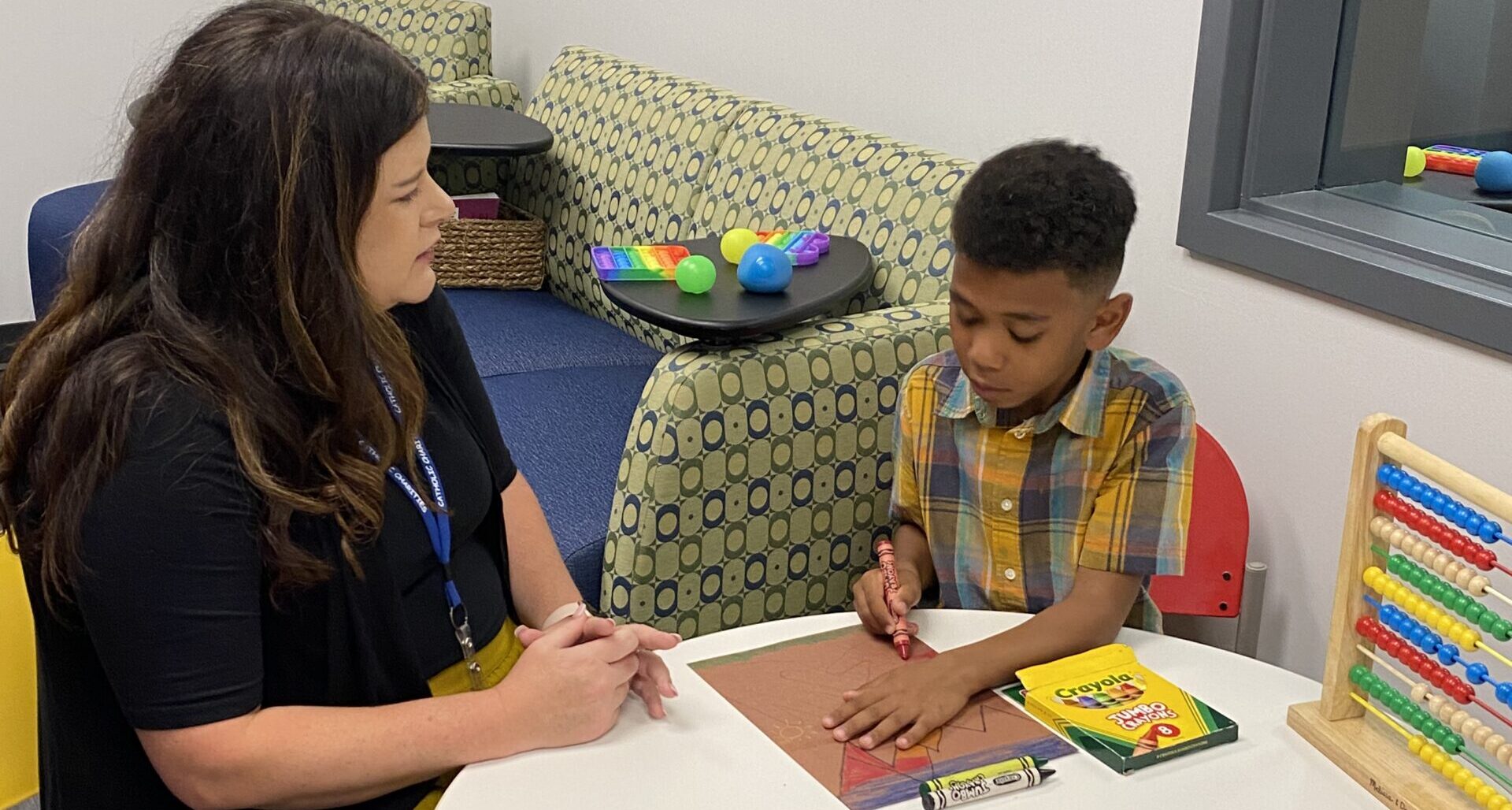
Catholic Charities of Omaha school therapist Jenna Whitaker visits with a student. Whitaker is director of the organization’s school mental health program. CATHOLIC CHARITIES OF OMAHA
News
School therapists fill a mental health gap
October 8, 2026
A version of this story originally appeared in the Fall 2026 edition of The True Voice magazine. Copies of the magazine can be found at parishes across the archdiocese.
Pope Leo XIV sees challenges young people face: isolation, loneliness, emotional instability, superficiality, relativism.
Mental health therapists in Catholic schools see possible related issues: anxiety, depression, pressure to succeed, fears of bullying – even thoughts of suicide or self-harm.
Students’ mental health concerns are significant, said Jenna Whitaker, director of the school mental health program at Catholic Charities of Omaha.
“Suicide is the second leading cause of death among youth 10 to 24,” Whitaker said. “One in five children have a mental health diagnosis.”
She sees a growing need for mental health support, particularly in schools – and Catholic Charities is helping to fill that gap by providing licensed therapists inside Catholic schools.
Now in its seventh year, the Catholic Charities school mental health program has contracts with 17 Catholic schools in the archdiocese, providing the regular presence of a therapist.
But the program’s impact is much wider, with therapists available to each of the more than 18,000 students in the 63 Catholic schools in the archdiocese – free of charge for families.
“If any child has a need, we respond,” said Denise Bartels, executive director of Catholic Charities of Omaha. “And we’ve done it quite a few times. It’s our mission.”
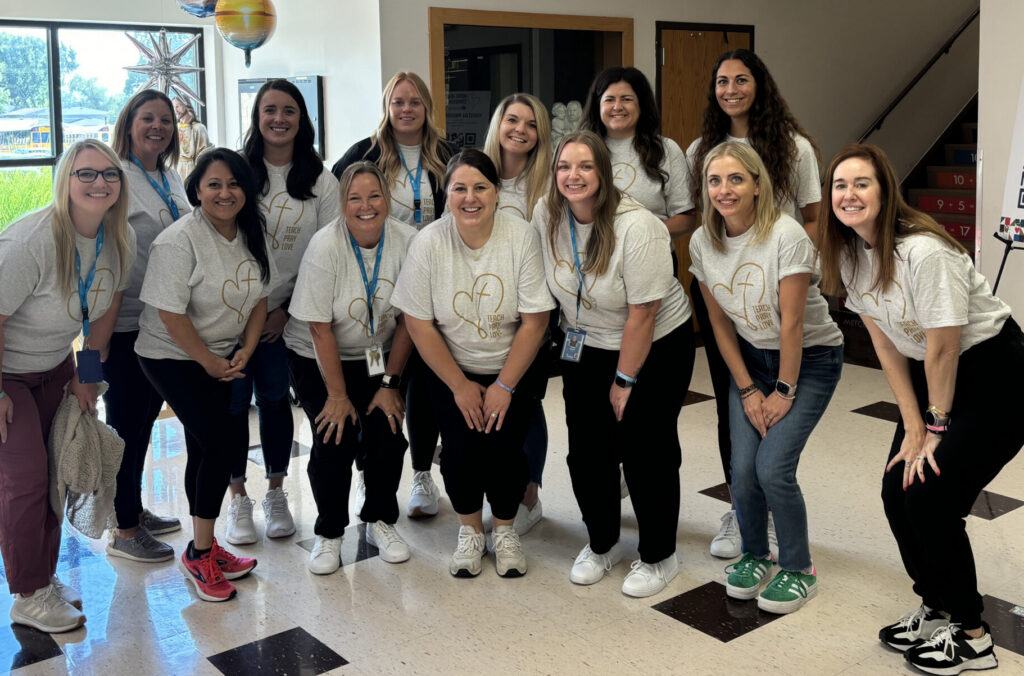
Members of the Behavioral Health Services team at Catholic Charities of Omaha gather for a photo. CATHOLIC CHARITIES OF OMAHA
A team of therapists – including a therapy dog – helped an entire St. Mary School community in O’Neill following a crisis a few years ago, high school principal Paula Atkeson said. “They made themselves available to the students and were really valuable to us, indispensable.”
Since then, a local therapist, working with Catholic Charities, is regularly on hand for students in kindergarten through 12th grade.
“Having a therapist available has made it so much easier for parents and students to access support when they need it,” Atkeson said. “One of the big barriers to mental health counseling is scheduling.When it can happen at school during the school day, that removes the difficulty for the parents and the students.”
Students already have some comfort in a school setting, said Whitaker and Amanda Buscher, another school therapist. They offer scheduled appointments for individual therapy sessions at the schools they serve, but they’re also willing to drop everything for a student or school in crisis.
Games, books, toys, clay and fidget devices help even their youngest clients feel at ease.
Obtaining parents’ permission begins a student’s therapy, and families stay involved, Whitaker said.
The mental health program can be tailored to a school’s unique needs, said Buscher, who works at Duchesne Academy of the Sacred Heart in Omaha and St. Mary School in Bellevue. “We’ve been able to fine tune and develop that with each of our schools.”
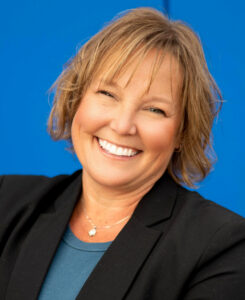
Amanda Buscher
Contract schools pay fees, but Catholic Charities and its donors help reduce those costs, said Dave Vankat, chief community engagement officer for the organization.
With easy access to the therapists, the contract schools have additional resources available to them.
A teacher might seek help with classroom behavior, or a principal might ask a therapist to address a mental health topic at a school assembly. Newsletters, tips and lists of resources are provided to both school staff and parents of all students.
Catholic Charities and its school mental health program helped educators across the archdiocese in 2024, working with the archdiocese’s Catholic Schools Office to offer mental health symposiums – recognizing the problem of burnout and fatigue. More than 1,400 educators attended.
The school mental health program’s impact ripples through communities, Bartels said, helping students, families, classrooms, teachers, schools and parishes.
But students’ individual success is key. “We’re always assessing where they’re at, how they’re doing, whether or not we’re noticing improvements,” said Whitaker, who works at Mary Our Queen and St. Vincent de Paul schools in Omaha. “For all of us, across the board, we’ve noticed that students’ outcomes have improved.”
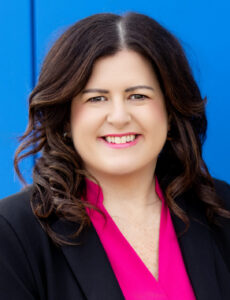
Jenna Whitaker
“Being able to bring a Catholic perspective into behavioral health therapy is important,” she said. She encourages prayer as a way to heal and cope.
“Something we are all able to connect on is our faith,” she said. “It’s something that we don’t have to shy away from.”
READ MORE FROM THE CATHOLIC VOICE: