
ROBERT ERVIN
News
Filipino faith and culture: a gift to keep and give away
January 15, 2026
A version of this story originally appeared in the January 2026 edition of The True Voice magazine. Copies of the magazine can be found at parishes across the archdiocese.
The faith of Filipino Americans, with their devotion to the Child Jesus, seems brightest during the Christmas season.
But their faith shines in all seasons — and through multiple generations — because of the traditions and culture they brought with them from the Philippines.
For sisters Ina Marie Louie and Maria Anderson, being Filipino American means showing respect to elders, eating dinner as a family, praying at a home altar, celebrating Christmas beginning inSeptember and continuing at least until the third week of January.
For Ben and Nancy Gonzales, their Catholic Filipino heritage involves handing down the faith to young people, leading their community, serving their parish and spreading devotion to their beloved Santo Niño (Child Jesus).
For Louie, Anderson and the Gonzaleses — who all immigrated to the United States in the 1980s — their faith is a treasure to be both guarded and shared.
“There is a tight Filipino community here in Omaha,” Anderson said. “We are all striving for the same mission, and that is to live out our culture, our traditions, and the things that are important to us, and to not lose where we came from.
“And we want to share it with the world because we’re proud of it,” she said.
Census data estimates 5,500 people are part of the Omaha-area Filipino community.
For many, their identity is rooted in faith. “I always say that we were Catholic before we were born,” Nancy Gonzales said.
Spanish explorers and missionaries brought Catholicism to the Philippines more than 500 years ago.
The Portuguese explorer Ferdinand Magellan gave a statue of the Child Jesus as a baptismal gift for a future queen. After that gesture, devotion to the Lord, under the title Santo Niño de Cebu, flourished.
Filipino Catholics around the worldhonor the Child Jesus, especially on the third Sunday of January, the feast of Santo Niño de Cebu. This year, in Omaha, a Mass and fiesta will be celebrated at St. Cecilia Cathedral in Omaha on January 18.

FILE PHOTO
Though food and dancing are part of the celebration, Ben and Nancy Gonzales prefer to emphasize the devotion.
In the Philippines, the celebration is “very holy, very pious,” Nancy said. “We should never lose that vision.”
Ben heads the Confradia del Santo Niño de Cebu — Greater Omaha Chapter, which organizes the Santa Niño celebration at St. Cecilia and fosters devotion to the Christ Child throughout the year.
That devotion and other Filipino traditions didn’t die when the family of Romeo and Cynthia Ulanday — Louie and Anderson’s parents — arrived in the United States.
“One of the biggest things with my parents was the importance of keeping the Filipino culture and traditions alive in our household,” Anderson said.
The children spoke their native Tagalog at home and learned English at school.
Family members ate dinner together and prayed the rosary, Angelus and other prayers.
Now as adults, the sisters emphasize prayer in their own families, bringing the faith they inherited into everyday life and Christmas traditions.
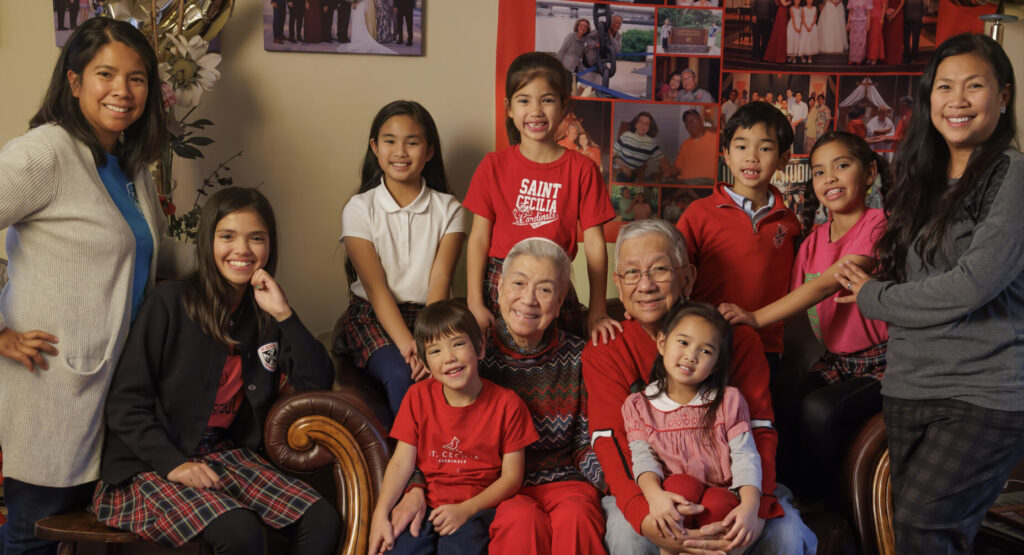
Maria Anderson, left, and Ina Marie Louie, right, are pictured with their parents and children. ROBERT ERVIN
The Filipino Christmas season is long, beginning Sept. 1 and continuing through the Epiphany and the feast of Santo Niño de Cebu.
In the Philippines, “once September hits, all the decorations are out in the malls,” Anderson said. “You’ll see parols everywhere.” Parols are traditional, star-shaped decorations, typically lanterns, that represent the Star of Bethlehem.
For many Filipinos, their devotion intensifies Dec. 16-24, when they participate in a novena of Masses, typically held in darkness or at dawn, called Simbang Gabi (Night Mass) or Misa de Gallo (Mass of the Rooster, because of the early hour).
A social with food typically follows each Mass.
Santa Claus and gifts weren’t a big part of Christmas when Louie and her siblings were growing up.
That simplicity is “what we try to live here now,” Louie said, as she and her husband, Wason, try to minimize the commercial aspect of Christmas with their three children. “It’s more about experiences,” she said.
Most Filipinos place a Nativity scene underneath their Christmas tree, because Christmas is “about Jesus being born,” Louie said.
Christmas caroling is also part of their heritage.
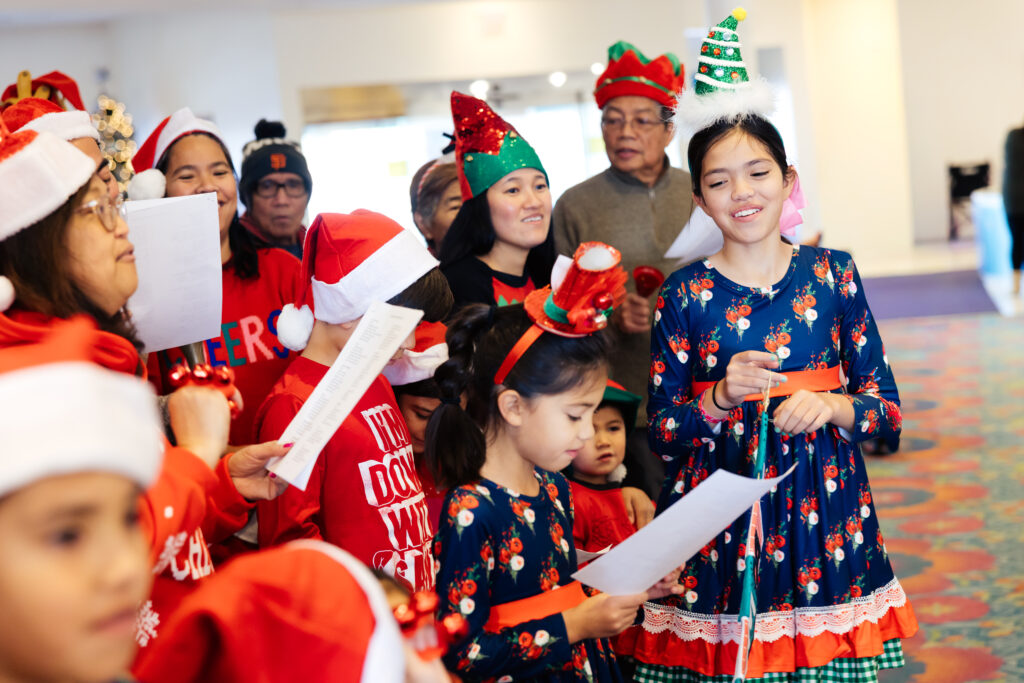
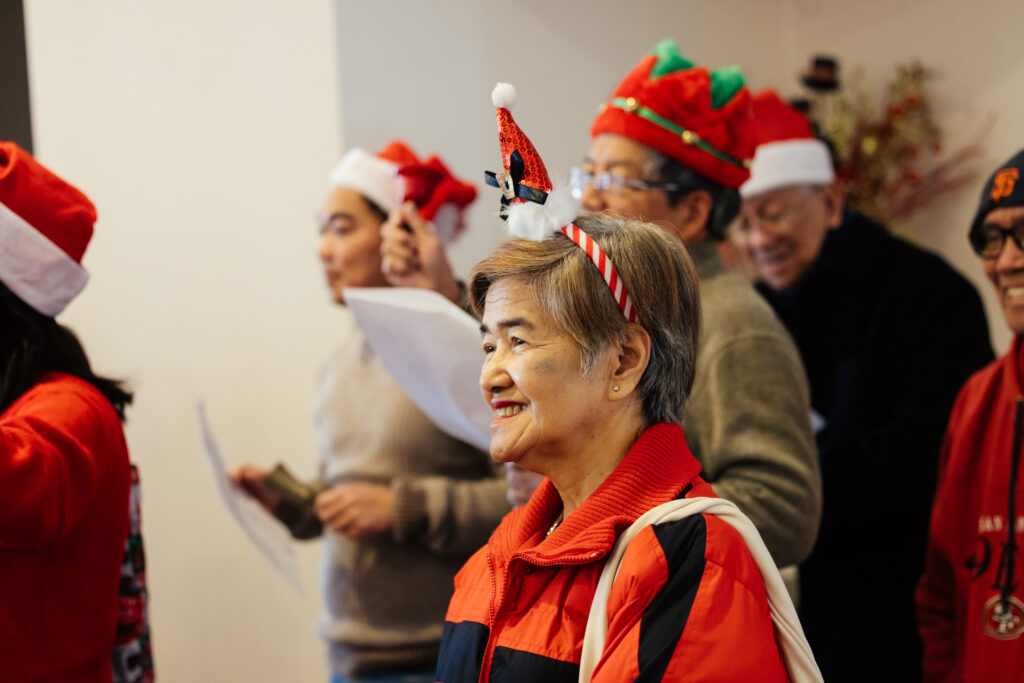
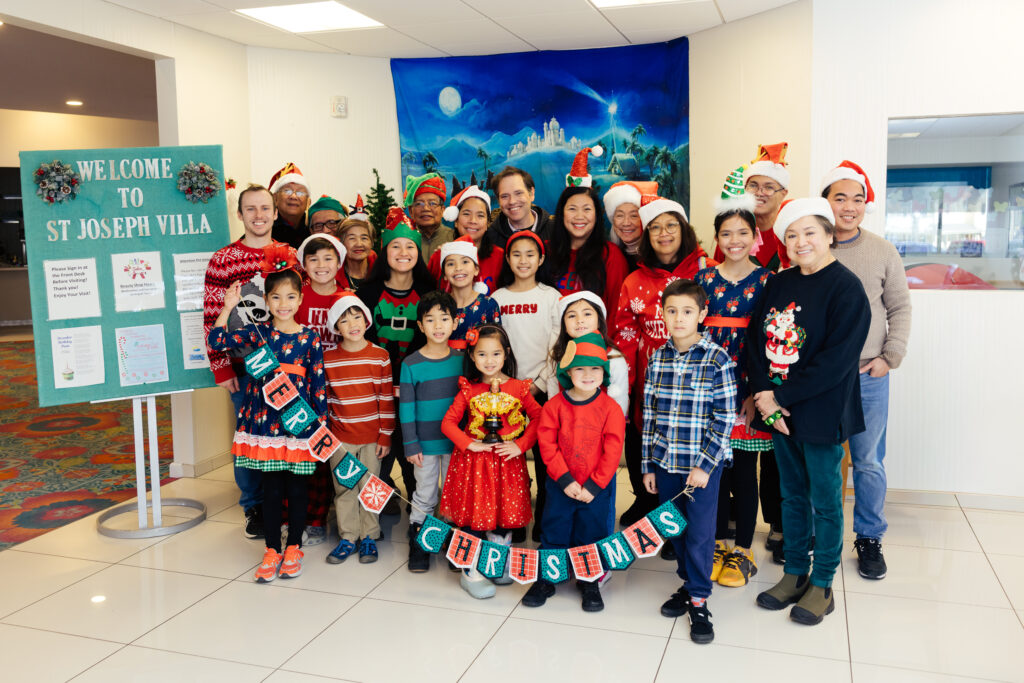
Each year, Louie and Anderson lead children, and sometimes adults, in singing at assisted living centers. In December they sang to residents at St. Joseph Villa in Omaha.

Christmas carolers sing to residents of St. Joseph Villa in Omaha in December 2025. AARON ZAVITS
Other traditions extend beyond the holiday season. One is respecting elders.
“It’s a huge part of our culture,” Anderson said.
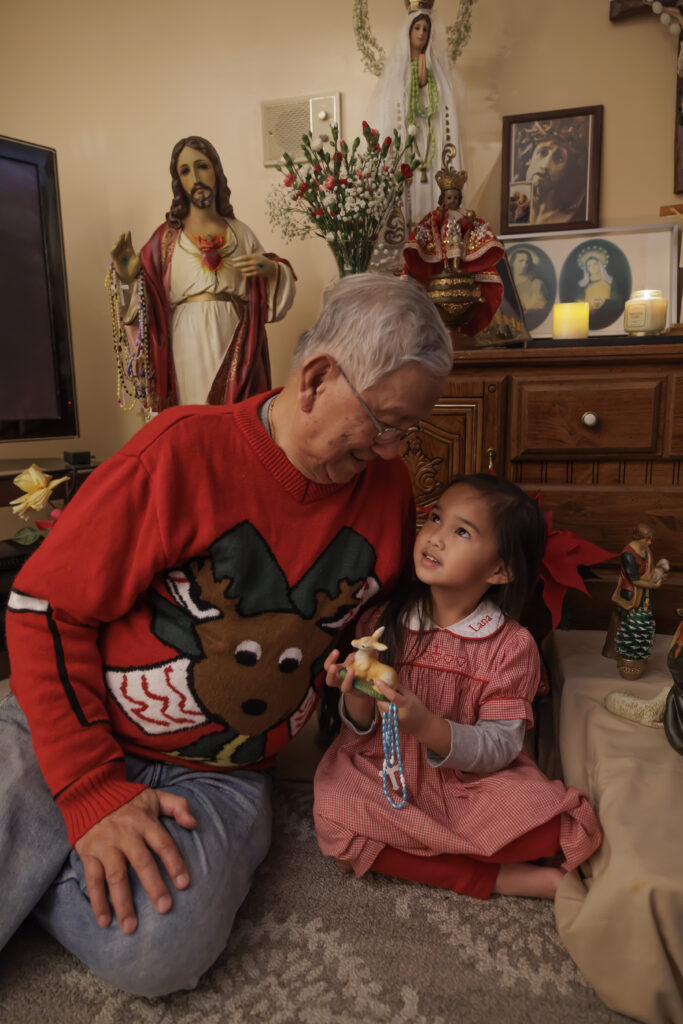
She and Louie said they try to teach their children that respect, exemplified in a gesture called mano po, which translates “(your) hand, please.” A young person gently takes the hand of an elder and brings that hand to their forehead, as a way to ask for blessing and to show humility and respect.

Mia Louie, daughter of Ina Marie and Wason Louie, pays respect to her grandfather, Romeo Ulanday. ROBERT ERVIN
“It goes back to our faith, and honoring our family,” said Anderson, who with her husband, John, has four children. “One of the biggest commandments is to honor your mother and father.”
“Our Filipino culture is always trying to live like Christ,” she said. “And you see that in so many of our traditions, in everyday life and our holiday traditions.”
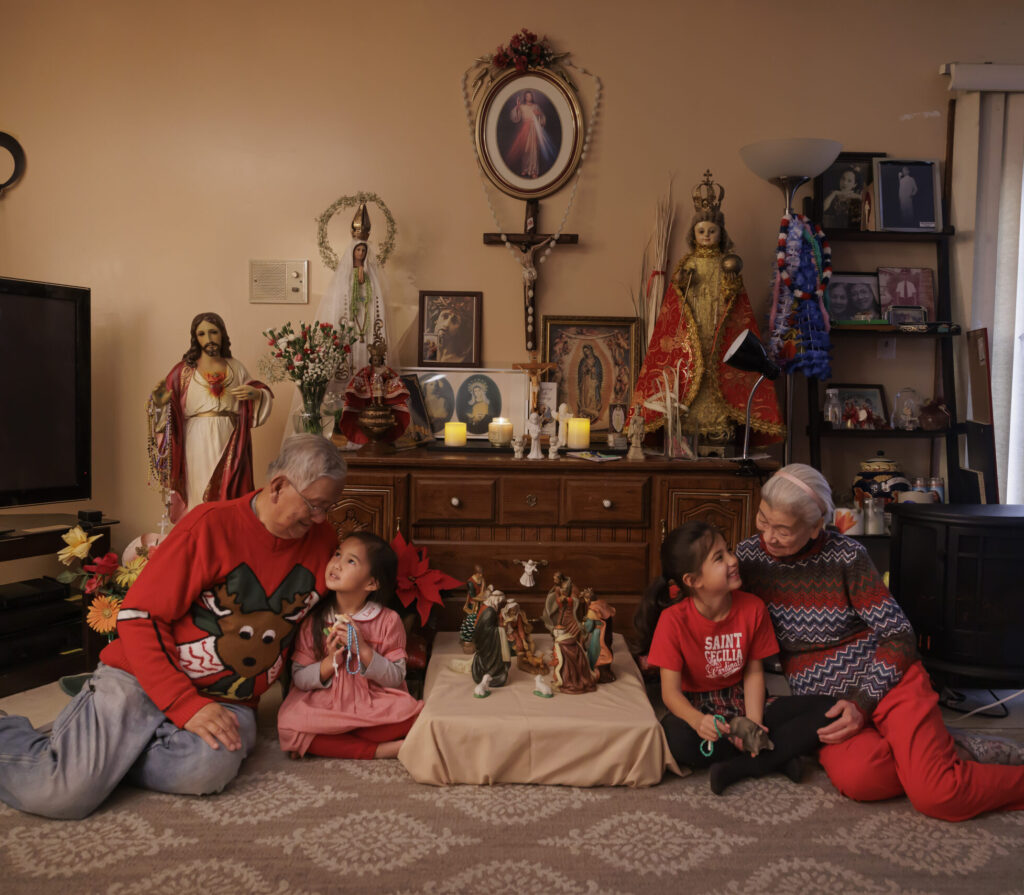
Many Filipinos create home altars, places to pray adorned with images of Jesus, Mary and the saints. Louie and Anderson’s parents handed down that custom to them and their five brothers.
The altar is “a place where all my kids can go and be with Christ and with Mother Mary,” Anderson said.
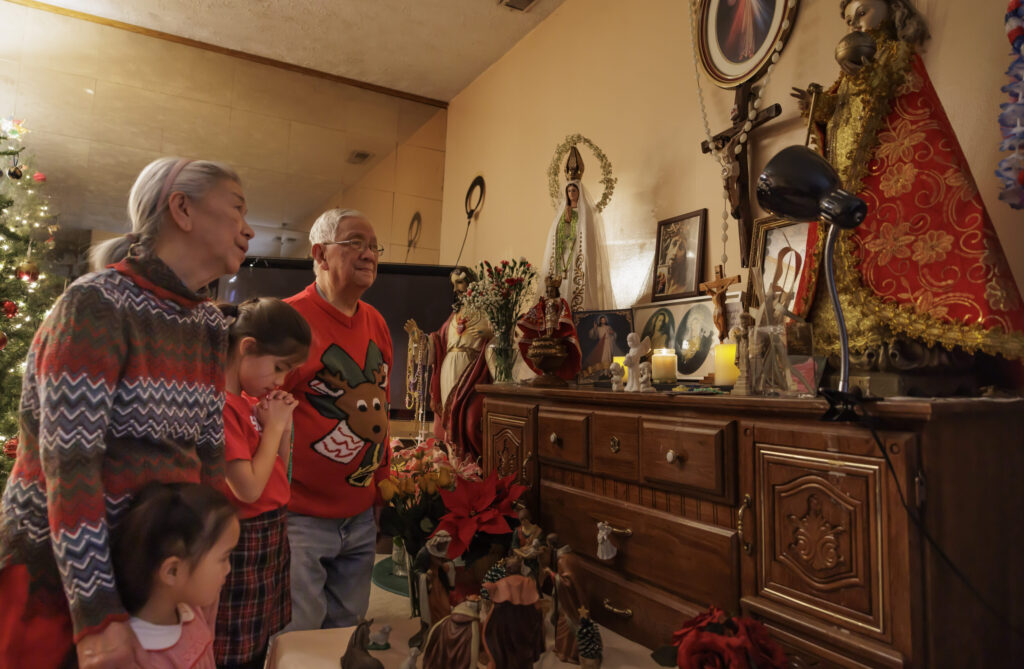
Cynthia and Romeo Ulanday pray before their home altar with two of their grandchildren. ROBERT ERVIN
Filipino faith is active, too, as demonstrated by the Gonzales, Anderson and Louie families, who
volunteer at church, school, the Confradia and more.
“Our parents always encouraged us to participate at church,” Louie said, “either singing, reading, or being servers or ushers.”
Now the sisters encourage thatparticipation with their own children.
It’s important to keep younger generations engaged in their faith and Filipino customs, said the Gonzaleses, who have two adult children and two grandsons.
Many young people become Americanized and lose their culture and faith, Nancy said. Honoring Filipino traditions, especially devotion to Santo Niño de Cebu, are the antidote.
Faith needs to be protected and nurtured, she said. “Because it’s faith, because it’s for the Lord.”
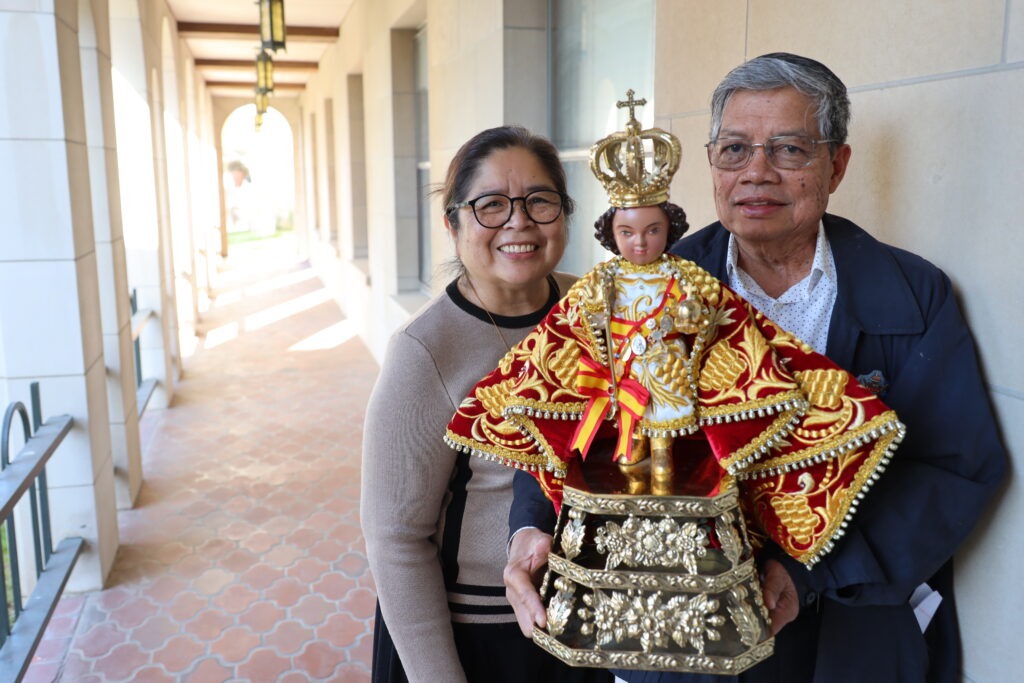
Nancy and Ben Gonzales are pictured on the grounds of St. Cecilia Parish with a statue of Santo Niño de Cebu. SUSAN SZALEWSKI
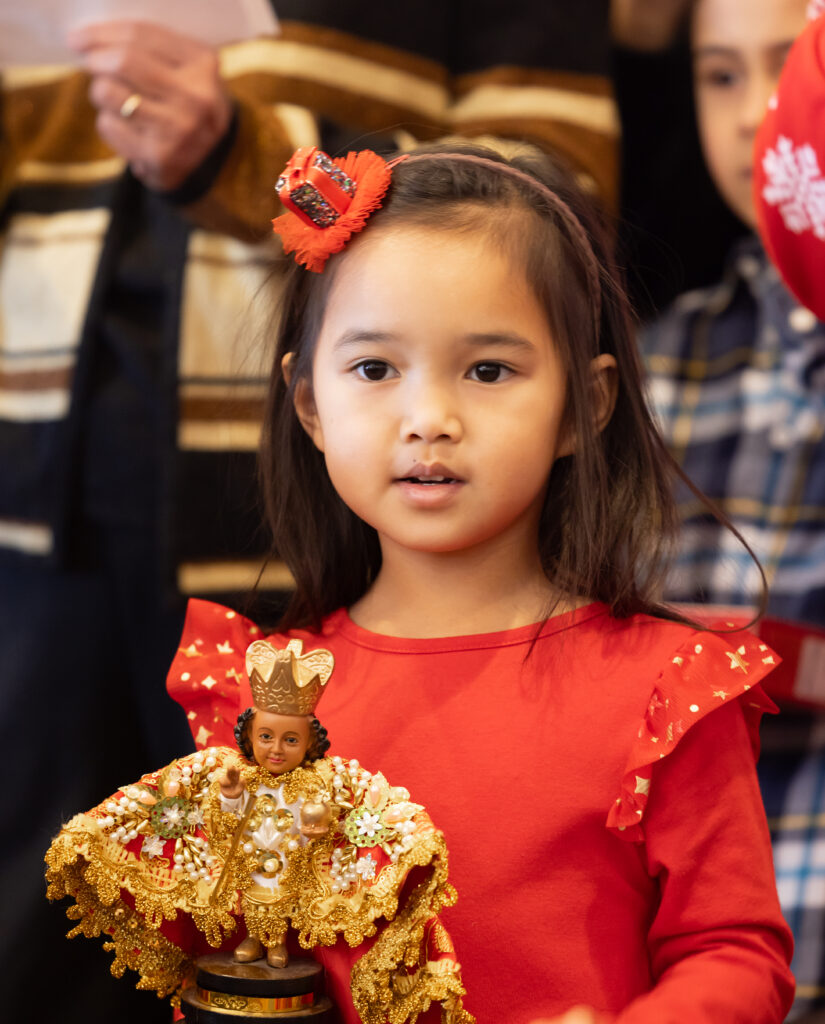
Lana Louie, daughter of Ina Marie and Wason Louie, holds a statue of Santo Niño de Cebu alongside family and friends caroling for residents of St. Joseph Villa in Omaha in December 2025. AARON ZAVITS

The Christmas carolers bring joy to St. Joseph Villa. AARON ZAVITS
AARON ZAVITS

AARON ZAVITS
AARON ZAVITS
AARON ZAVITS
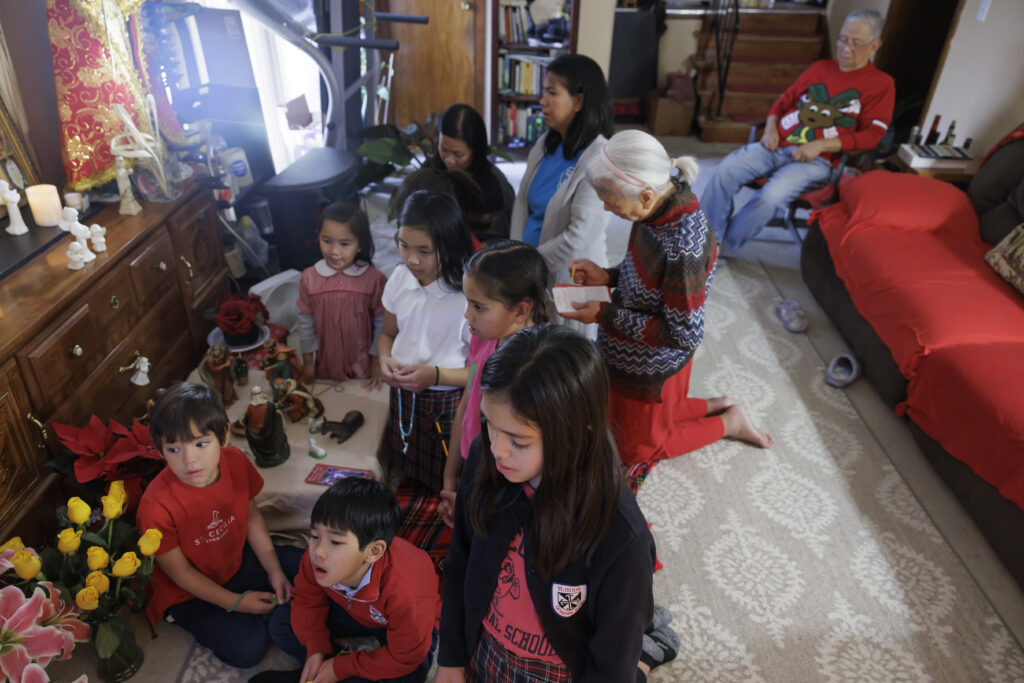
Members of the Romeo and Cynthia Ulanday family pray before a home altar. ROBERT ERVIN

Cynthia and Romeo Ulanday are surrounded by grandchildren. ROBERT ERVIN

ROBERT ERVIN
ROBERT ERVIN
ROBERT ERVIN
READ MORE FROM THE CATHOLIC VOICE: